Scribbling Machines: GenAI and the New Industrial Revolution
For 240 years we have petitioned against the machine, from the scribbling frames of Leeds to the ATM to generative AI. The argument never changes, and neither does the ending: GenAI commoditizes cognitive labor the way steam commoditized muscle, and augments the person using it.
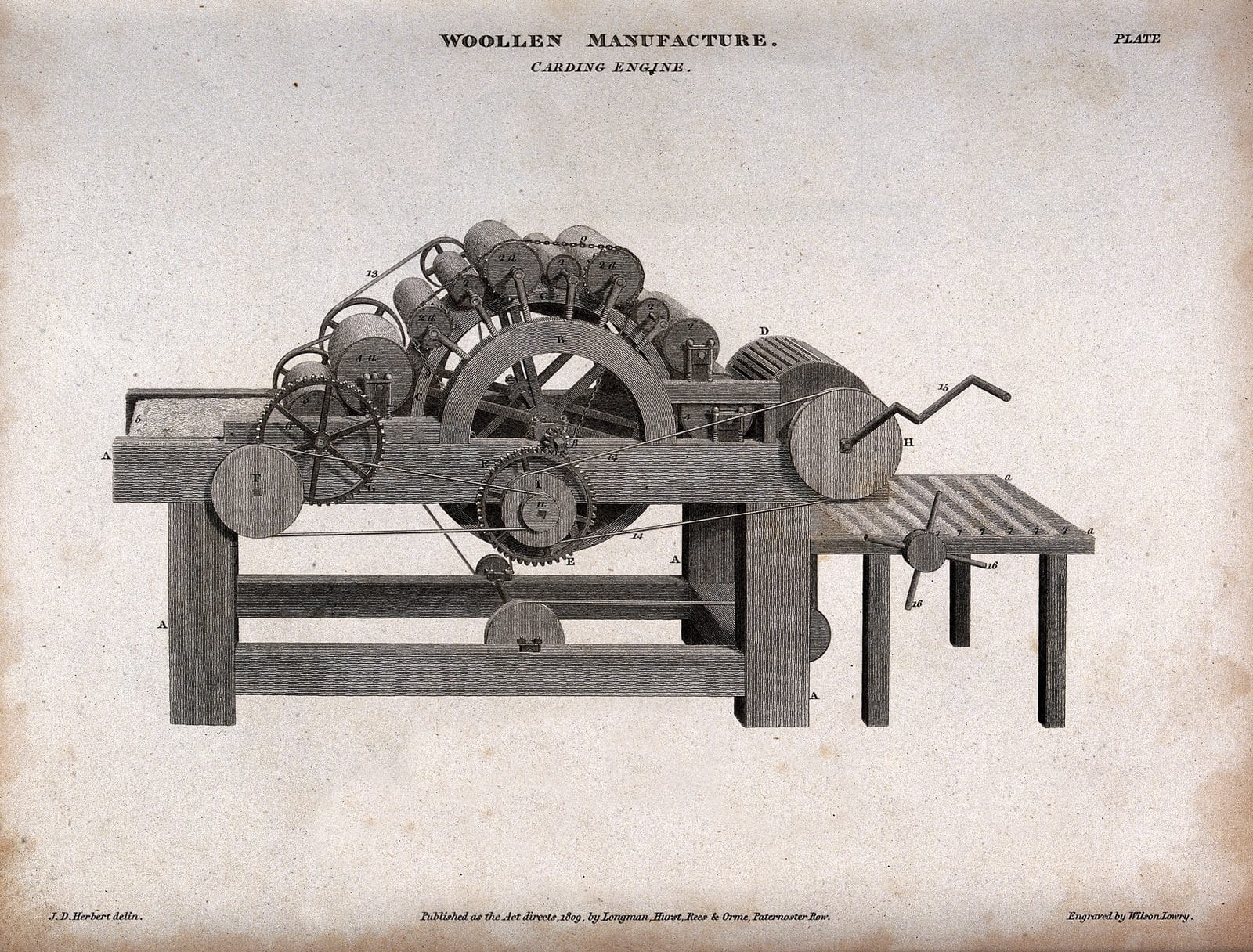
In 1786, a group of cloth workers in Leeds put their names to a petition. Not against a king, or a tax, or a war, but against a machine.
The machine in question was the scribbling machine, and its job sounds almost quaint today. To "scribble" wool was to comb and tease raw fibers until they lay straight enough to be spun into thread. It was skilled, tedious work, and for generations it had been done by human hands.
The weavers of Leeds only knew what was in front of them, and they wrote it down plainly:
"That the Scribbling-Machines have thrown thousands of your petitioners out of employ, whereby they are brought into great distress, and are not able to procure a maintenance for their families... We therefore hope, that the feelings of humanity will lead those who have it in their power to prevent the use of those machines."
They even anticipated the modern rebuttal, the cheerful just learn a new skill, and answered it with a weariness that would feel at home in any comment thread today:
"Some say, Begin and learn some other business. Suppose we do; who will maintain our families, whilst we undertake the arduous task; and when we have learned it, how do we know we shall be any better for all our pains; for by the time we have served our second apprenticeship, another machine may arise, which may take away that business also."
Change "scribbling machines" to "generative AI" and the passage reads like something posted this week. It is worth sitting with that for a moment: these words are almost 240 years old, written about a machine that combed wool, and yet the shape of the worry, the pace of change, the fear of a lost trade, is almost exactly the one we voice today.1
The argument that never dies
The Leeds petition was not a one-off. It is a genre, and every generation writes its own version. We change the nouns and keep the verbs.
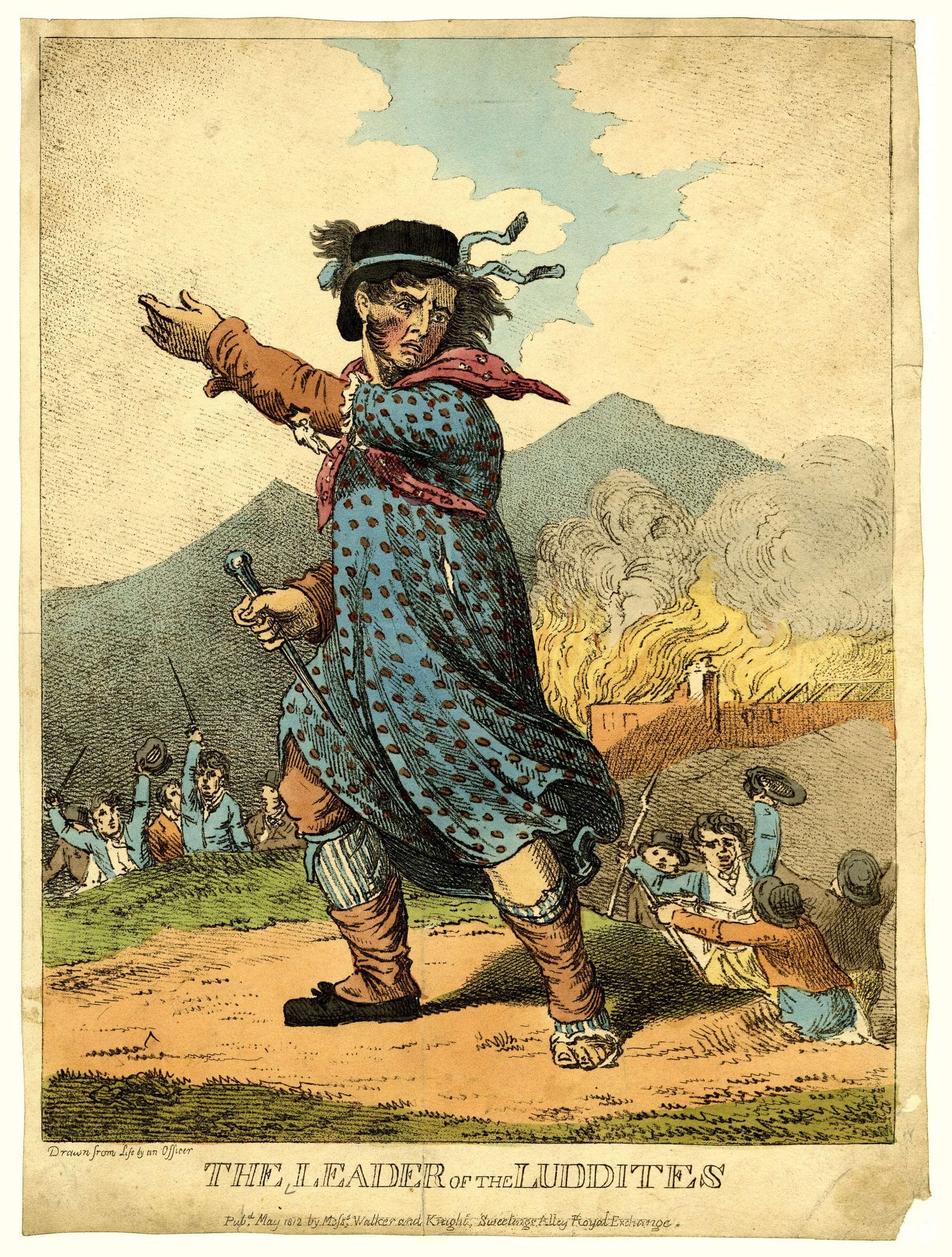
In 1811 the Luddites took hammers to the power looms and knitting frames that were reshaping their trade. Their protest was serious enough that Parliament made frame-breaking a capital crime, and serious enough that Lord Byron rose in the House of Lords to defend the workers before writing them an anthem: "we, boys, we / Shall die fighting or live free, / And down with all kings but King Ludd." We remember "Luddite" as an insult now. It began as a labor movement.2
A century and a half later the fear put on a lab coat. When computers and industrial automation arrived, President John F. Kennedy called it "the major domestic challenge, really, of the sixties, to maintain full employment at a time when automation, of course, is replacing men."3 Congress held hearings. Commissions were formed. The word on everyone's lips was "displacement."

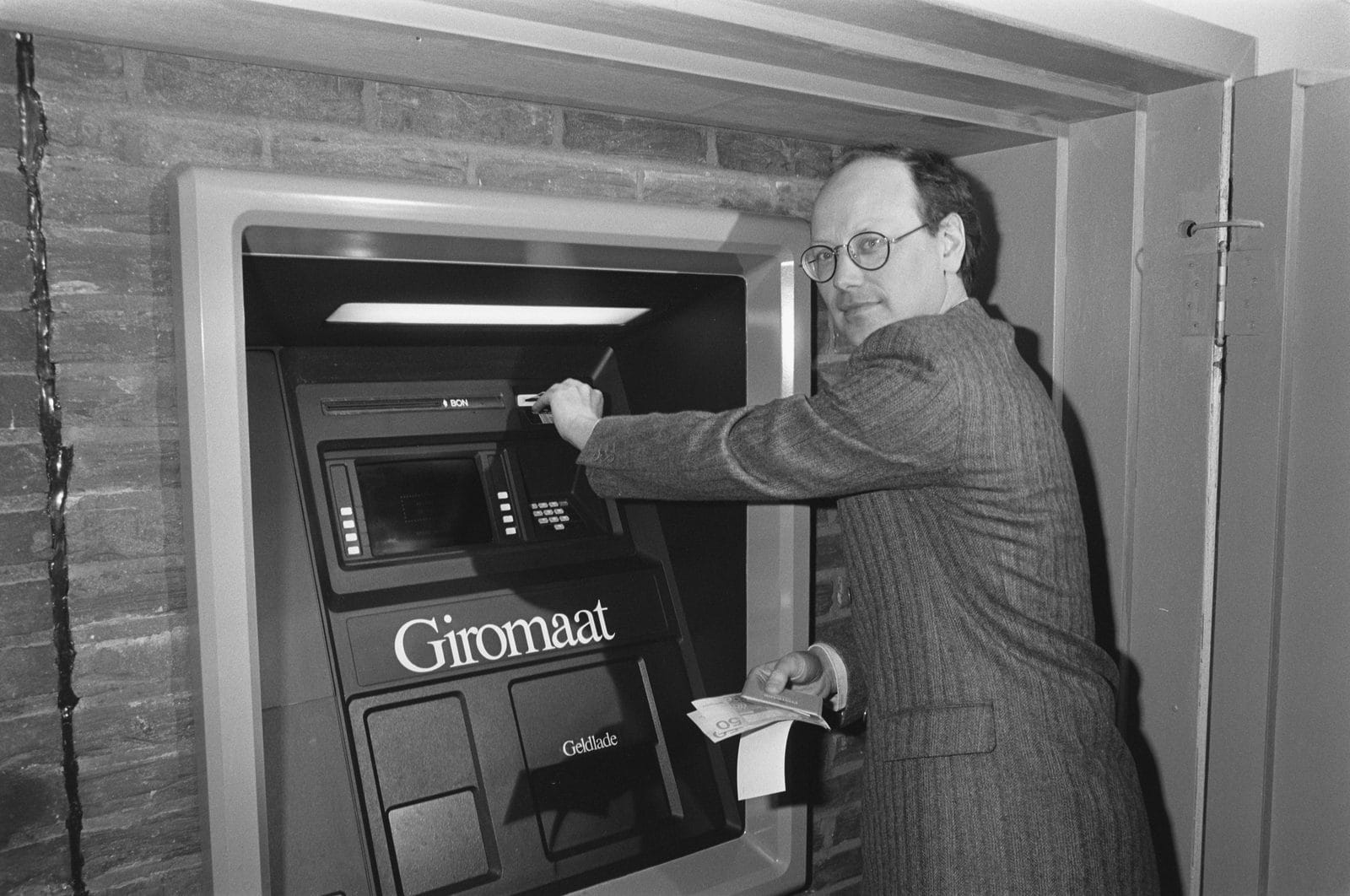
Then came the ATM. When automated teller machines spread through the 1970s and 80s, the conclusion seemed obvious to everyone: a machine that dispenses cash will surely eliminate the humans who dispense cash. The bank teller was, by consensus, a doomed profession.
Different decades, different machines, one script: this time the machine does not just help us work, it replaces the worker.
What actually happened at the bank
Here is the part the script never accounts for.
The economist James Bessen went and counted. The number of bank tellers in the United States did not collapse after the ATM. It rose, from roughly 300,000 in 1970 to around 600,000 by 2010, growing faster than the labor force as a whole.4 How does that happen?
The ATM absorbed the routine cash-in, cash-out drudgery. That made each branch cheaper to run, so banks opened far more of them, and each new branch still needed people. Meanwhile the teller's job quietly changed. With the boring parts automated, tellers moved toward the things a cash drawer cannot do: solving problems, building relationships, handling the transactions that do not fit in a slot. The machine did not replace the teller. It rewrote the job, and then it hired more people to do the new version.
This is the pattern the petitions keep missing. The first Industrial Revolution did not destroy work; it commoditized muscle. A steam engine made physical power cheap and abundant, and once power was cheap we did not need fewer workers. We built entire industries that had been impossible when power was scarce and expensive. The weavers of Leeds could not see the factories, the railways, the whole modern economy that cheap mechanical power would eventually stand up. They could only see the scribbling machine in front of them, doing in twelve hours what took ten men a day.
The part the old story gets wrong
If the first Industrial Revolution commoditized manual labor, generative AI is beginning to commoditize cognitive labor. Drafting, summarizing, translating, coding, researching, sketching the shape of an argument: the raw material of knowledge work is becoming cheap and abundant, much the way mechanical power once did.
But a steam engine never made the individual weaver better at weaving. It stood beside them, or it stood in their place. This is where the old story finally breaks, because generative AI does something the steam engine never could. It augments the person using it. And it is worth being precise about where it helps, because the honest answer is more interesting than "it does the work for you."
It helps most with the blank page.
Anyone who makes things for a living knows that starting is the hard part. The blank page is where we freeze, where the cursor blinks and the whole project feels impossibly far away. What GenAI is genuinely good at is producing a first draft: a rough, imperfect, argue-with-me starting point that did not exist a second ago. And it turns out that humans are far better as critics than as blank-page creators. We are quick to know what is wrong and slow to summon something from nothing. Hand a person an empty document and they stall; hand them a flawed draft and they come alive, cutting, reshaping, correcting, improving. The machine is bad at judgment and good at starting. We are bad at starting and good at judgment. That is not a threat. That is a partnership.
So the ATM story repeats itself, now at the scale of the entire knowledge economy. The routine cognition gets commoditized. The human moves up the stack, toward taste, direction, judgment, and the questions worth asking in the first place. The floor rises, and the people standing on it can suddenly reach things that were out of range the day before. The frontier is already moving past pure generation toward systems that plan and act on their own, what the industry has started to call agentic AI, but the underlying bargain does not change: the machine handles the routine, and the human supplies the judgment.
The soot we had to scrub away
There is a cost to all of this, and it would be dishonest to wave it off. But before we talk about the cost of the new machine, we should be honest about the old one, because we tell the story of the first Industrial Revolution as one of triumph and forget that it very nearly choked us.
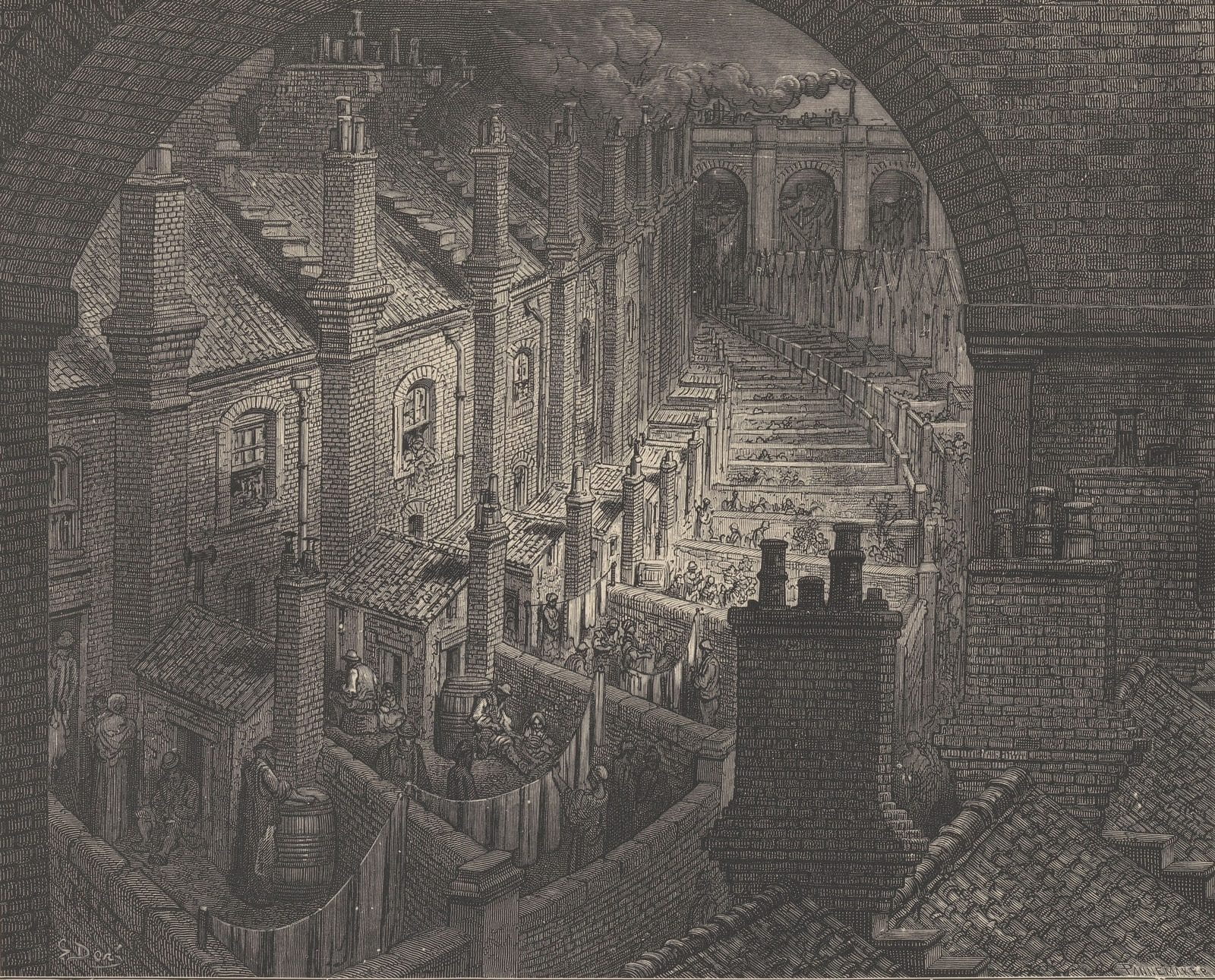
It was filthy. Coal smoke turned Manchester, Birmingham, and London black: buildings, lungs, and skies alike. The "pea-souper" fogs that hang over Dickens and Monet were not atmosphere, they were pollution. In 1858 the Thames grew so thick with raw sewage and industrial runoff that the stench shut down Parliament, an episode remembered as the Great Stink. The harm was real and measurable: in December 1952 a five-day coal smog settled over London and is estimated to have caused thousands of deaths. Only then, more than a century into the problem, did Britain pass the Clean Air Act of 1956 and begin the slow, expensive work of scrubbing the soot off everything it had touched. We cleaned it up, but we cleaned it up afterward, reactively, only once the damage was impossible to ignore.5
Today's scribbling machines have their own exhaust: data centers that draw real electricity and real water to keep the fibers of language moving, and the bill is growing fast. So the machines have to get cleaner, exactly as they did before. And the encouraging part is that they are: the energy spent per query is already falling quickly as hardware and models improve. The catch, and it is a real one, is that efficiency alone has never been enough, because as steam grew cheap we simply used far more of it and total coal consumption soared anyway.6 The same trap is open in front of us now.
But here is the difference, and it is the whole point. The Victorians did not know what the coal was doing to them until the cities were already black and the death tolls were already in. We do. We are standing at the start of this revolution with the last one's ledger open in our hands, which means we have the rare chance to build clean from the beginning instead of poisoning ourselves first and paying to remediate it later. We already know how this chapter goes if we ignore it. The task this time is to not need a Great Smog, and not need a Clean Air Act written in hindsight, before we do the right thing.
Down with all kings but King Ludd?
None of this makes the transition painless. The weavers of Leeds were not wrong that their jobs were changing, and they were not wrong to be frightened. Real people lived through real dislocation, and pretending otherwise is its own kind of dishonesty. Augmentation is a story about the aggregate and the long run, and it is cold comfort in the short run if you are the one being asked to serve a second apprenticeship.
But the historical record is remarkably consistent about who comes out ahead. It is not the people who petition to prevent the use of the machine. It is the people who pick it up, learn what it is actually good at, and let it lift the ceiling on what they can do. The scribbling machine won. The power loom won. The computer won. The ATM won, and it carried the tellers up with it.
I will let you in on something, dear reader. This very post leaned on a scribbling machine of my own, and I want to be precise about who did what. The thesis is mine: that we are living through a second Industrial Revolution, one that commoditizes cognition the way the first commoditized muscle, and that the machine earns its keep when it hands you a first draft to argue with. The shape of the argument, the choice to open in a Leeds wool shop, the wager that scribbling wool and scribbling text are the same bargain in different fiber, all of that walked in with me. What I handed the machine was the fetching and the checking. It ran down the full text of the 1786 petition, dug up Byron's anthem and the exact date of Kennedy's press conference, tracked Bessen's count of bank tellers, and pulled the numbers on the Great Smog and on what the new machines cost the grid. Then I did the part I am actually good at. I argued with it, threw out what did not belong, reshaped the rest, and checked every fact until the thing was worth your time. The ideas are mine. The machine just carried the books.
The scribbling machine of 1786 combed wool so that a person could spin it into something worth wearing. The scribbling machine of today combs language so that a person can spin it into something worth reading. And language is becoming more than something to read. Increasingly it is something that runs, as words turn into instructions a machine can carry out, into execution, and that is a thread I will pull on in later posts. It is the same bargain, offered again with a new kind of fiber. The question is the one the workers of Leeds faced, and the one every generation since has had to answer: are you going to break the machine, or are you going to use it to reach higher than you could before?
Notes
1
Leeds Woollen Workers Petition, 1786: full text via the Fordham University Internet Modern History Sourcebook, sourcebooks.fordham.edu/mod/1786machines.asp (from J. F. C. Harrison, Society and Politics in England, 1780-1960).
2
Lord Byron, Song for the Luddites (1816) and Byron's 1812 speech in the House of Lords against the Frame Breaking Act: see the History Channel overview, "The Original Luddites Raged Against the Machine of the Industrial Revolution."
3
John F. Kennedy on automation: the President's News Conference, February 14, 1962. Transcript at the JFK Presidential Library and the American Presidency Project.
4
ATMs and bank tellers: James Bessen, Learning by Doing: The Real Connection Between Innovation, Wages, and Wealth (Yale University Press, 2015). A short summary of the teller data appears at AEI.
5
The first revolution's pollution: the Great Smog of London, 1952 (estimated 10,000-12,000 deaths) and the resulting UK Clean Air Act of 1956; the Great Stink of 1858.
6
AI's energy and water footprint: the International Energy Agency's 2025 analysis of surging data-centre electricity demand, iea.org. On efficiency gains being outrun by scale, see the Jevons paradox.
Image credits
- A carding machine for wool, engraving by W. Lowry, 1809. Wellcome Collection, licensed CC BY 4.0.
- The Leader of the Luddites, hand-colored etching, published 1812 by Walker and Knight. Public domain, via Wikimedia Commons.
- Over London by Rail, Gustave Doré, 1872. Public domain, via Wikimedia Commons.
- President John F. Kennedy, White House portrait by Cecil Stoughton, 1963. Public domain (U.S. federal government work), via Wikimedia Commons.
- The first giromaat (ATM) in Amsterdam, Rob Croes / Anefo, 1987. Nationaal Archief, released under CC0, via Wikimedia Commons.


